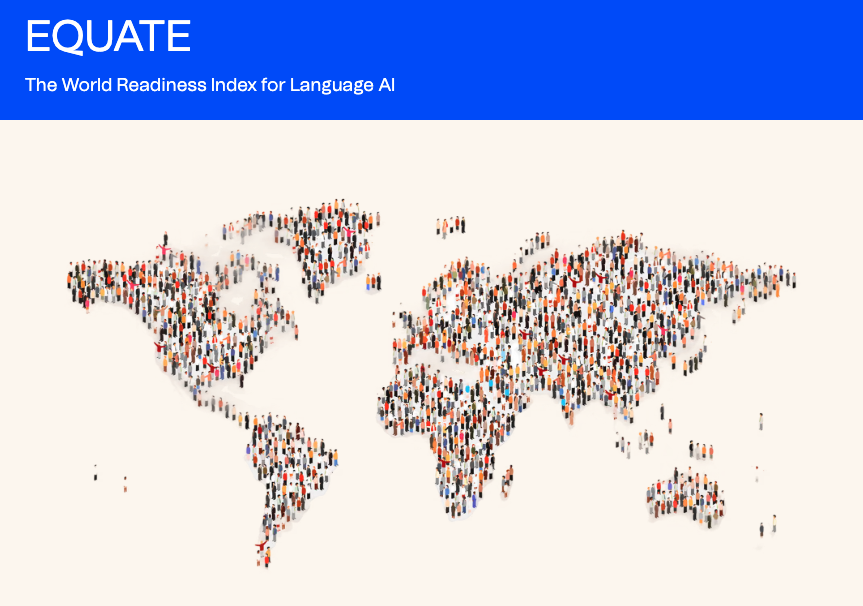
EQUATE works to make language AI more equitable across the world's 7,000+ languages. Most language technology serves a small set of dominant, Global-North languages, leaving the majority of the world's linguistic communities digitally underrepresented — EQUATE builds tools and partnerships to change that.
Motivation
AI's benefits are unevenly distributed by language. Communities without "high-resource" languages are locked out of tools the rest of the world takes for granted, which compounds existing gaps in digital infrastructure and representation.
Approach
The project has two main strands: the EQUATE Language AI Readiness Index, which assesses how ready a language and its community are for technology adoption by combining AI-resource, digital-infrastructure, and socioeconomic indicators; and COACT, a community-centred, participatory, actionable roadmap to equitable language AI, drawing on NLP, HCI, international development, and participatory research.
Case studies
Case studies examine real development challenges: disaster risk reduction and cultural preservation in Nepal, green jobs and climate resilience in Uganda, cultural preservation in Peru, and technology-needs assessments in Indonesia — alongside technical research into small language models and culturally-aware, transparent NLP approaches.
Equity in language AI isn't just about better translation — it's about who gets to participate in building the tools that shape their own digital future.
Outcomes & impact
EQUATE is ongoing, led by Anna Korhonen and the Language Technology Lab at the University of Cambridge, with funding from the European Research Council and UK Research and Innovation.
Collaborators
- Anna Korhonen (PI), University of Cambridge
- Centre for Human-Inspired AI
- University College London
- Waseda University
- Makerere University
- Partner institutions in Nepal, Uganda, Peru, and Indonesia
Credits & disclosure
Header image: From the EQUATE home page.
None of the text above was written or generated by AI.